Showing posts with label water. Show all posts

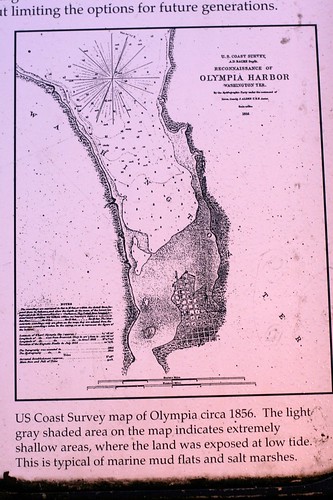
Olympia Harbor in 1856

Olympia
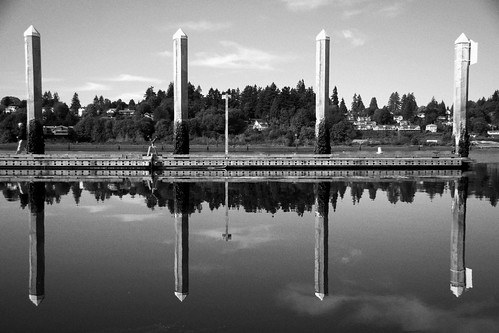
view larger: Olympia Harbor

Washington did not become a state until 1889. Washington was the 42nd state to become part of the United States.

In 1856, over 30 years prior to Washington becoming a state, the landscape around Olympia was very different than it is today, in 2010.

I imagine that the environment was much healthier back then, with great flocks of wild birds, and a bounteous feast accessible for harvest from the waters of the Salish Sea.

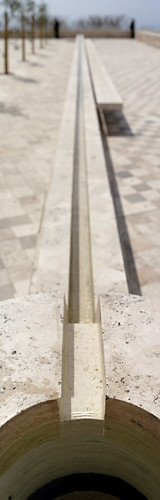
Getty Museum Water Feature

Water Feature

This is at the Getty Museum, Santa Monica, Los Angeles
It's a multi-image composite, and it's from April 2009
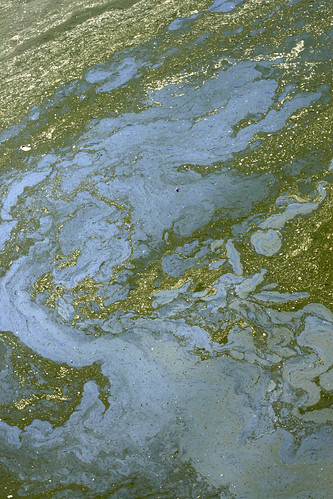
view large: Water Feature

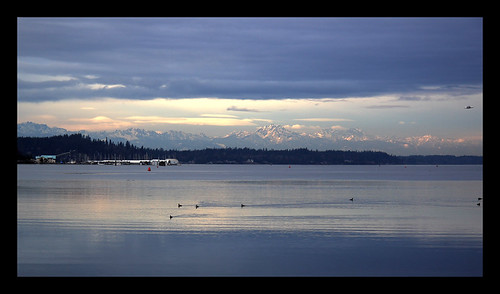
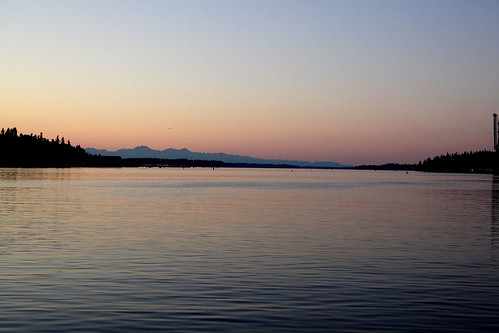
Olympic Mountains

I am not super keen on the thick border on this photo, but it's a pretty view of the mountains:
Olympic Mountains
Olympic Mountains

view larger: Olympic Mountains

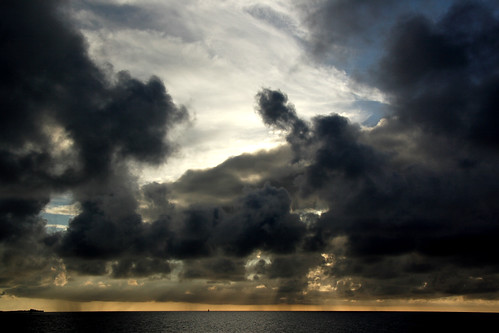
Lake Powell

Glen Canyon
The former Glen Canyon

This landscape reminds me of the planet Tatooine, from the film Star Wars.

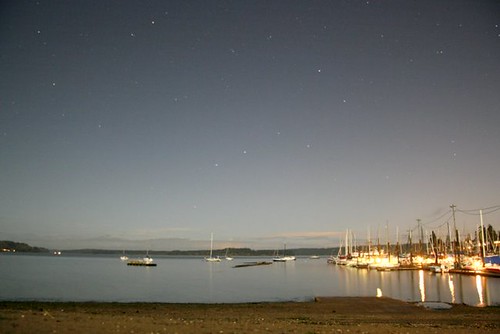
Moon and Water at Boston Harbor

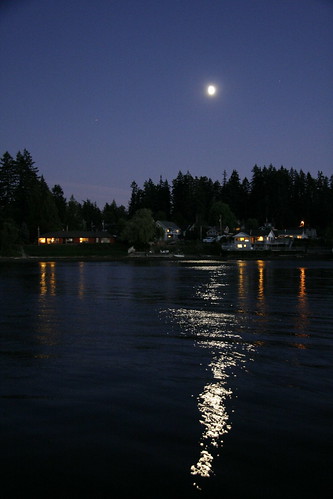
Moon with Reflection on Water
Boston Harbor

4th Ave Bridge at Night

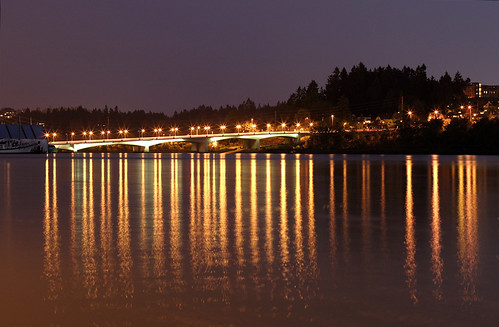
Budd Bay 4th Avenue Bridge Lights

More photos of "(4th Ave Bridge)" (many are of the 4th Ave Bridge in Olympia) on Flickr: www.flickr.com/search/?q=4th+avenue+bridge

Water World

I had hoped to attend tonight's City Council Meeting to talk about a couple different topics related to water. Well there wasn't a meeting. Anyway, the water related topics: one relates to the maintenance of an Artesian Well in downtown Olympia. The other relates to the restoration of the Deschutes River Estuary.

The Artesian Well is used by a wide variety of community members. It is an attractor, serving to bring people to downtown Olympia. It is also a critical resource for people who need access to the water, for whatever reason. I believe that access to safe, clean, potable water is a human right. The well is important for a number of reasons. Water is a critical element in life, including that of humans. Protecting this community resource, this tremendous community asset, is important. Water is a symbol of our common humanity. It is something we all share. Our bodies are composed of roughly on the order of 70% water. Many people from all socio-economic strata and backgrounds use the well. So let's honor this important community resource and do what it takes to ensure continuing open and free access to this wonderful and magical free-flowing Artesian well water.

Secondly, on the issue of the CLAMP, I am curious about how the City of Olympia is approaching the matter of the Capitol Lake. My understanding is that some deliberations are taking place, or did take place, last week. On this issue I feel it is the right move to work toward restoration of the estuary. This society has committed massive damages against the natural environment. For example, wild salmon runs are decimated. The opportunity to restore the estuary is just that, an opportunity—and an excellent way to move forward as a community in terms of environmental remediation, restoration of an important natural ecosystem, and amelioration of harms relating to our relationship with the natural world.

Peace, Berd

Corporate Power: the Ethics of Social and Environmental Degradation

This is a work in progress. Here are few statements that I want to explore, and a few questions that I want to answer and work with in more depth.

1) Statement: Corporate Power - that power which is vested in the biggest and most massive (primarily) international corporations - is doing harm to humanity and to the planet (to animals, plants, rocks, landscapes, mountains, oceans, air, water, etc.).

2) Question: Is it unethical to reap financial profit, from those activities which do harm and cause degradation: whether to individuals, whole societies, or whole systems (eco-systems or planets)? An alternative question is to ask "what are the ethics involved in" the process of reaping financial reward from activities which do harm / cause degradation.

(Yes, moralizing can be difficult, but we have social values and morals and ethics for a reason - to provide for the well-being, and to protect, individual, society, and increasingly more so, the very planet itself.)

Taken to its extreme and ultimate final end product, social and environmental degradation could possibly result in a destroyed planet - i.e. planetary destruction. It's scary to think that humanity may be so advanced "techno'logically'" that it will even be able to escape such a destroyed planet - only to spread a culture of degradation and destruction into other worlds...

What if the Occupier Were to Come to this Land

What if it were you. What if, for example, a foreign country X decided that it was in its best interests to invade YOUR country. Let's use water as an example here. What if Country X was worried about running out of water. It's people were in danger, in the not so distant future, of not having sufficient water to live normally.

So Country X started to think about how important it is economically that mostly everyone have enough water to function normally. So they start to buy water from foreign countries. At first a little, then some more, then a lot. This goes on for some time, and most people are mostly happy. Country X starts to build a big military so that it can protect its water interests in the future, because it looks like there might not be enough for everyone in the world to have enough. And they want to make sure that they have access to enough for themselves.

At some point, Country X runs into some major water problems. There is fast approaching a point where there is just not enough supply to meet growing demands... And yuck, they even managed to contaminate large amounts of their own native supplies. Whoops. But damn, wasn't building that military a good idea. Because you know what, Country X is now able to go into other countries and take water without asking. In fact, this idea of using military conquest for resource control even has the potential to be lucrative for those who know how to work it.

What if this were to happen? What if it were to happen to you? What if you found soldiers from Country X in your city, hooking up hoses to your artesian well and shipping it back, perhaps even across an ocean to another continent. Hooking up to the water that you have always depended on for your quality of life in order to supply its own people with enough water so that they can function normally? Don't worry they say - they will start to pay you for the water once they hold elections and establish a new government.

This is what is happening in Iraq. The US is piping oil from Iraq to ships that then bring it to the USA.

I like the old adage that you get what you give.

I want the USA to be aware of how it wages wars for control over resources. Because it might come back to haunt "us" someday. Maybe there is a Country X somewhere out there, polluting its own water resources, watching its supplies struggle to keep up with demands in the face of a growing, and thirsty, population - and anticipating a time when it may be necessary to occupy other countries in order to ensure its own access to sufficient water supplies. Water, oil, air, land. Isn't it time that we figure out ways to use and share the resources of this planet responsibly so that aggressive wars of control over resources are not necessary in the first place?

There are other options besides fueling an addiction to easy petroleum. We need to explore those alternatives if we care about human rights and human dignity. There will be other options, in the future, besides waging wars over who gets access to the world's great water supplies. We can enable those options by speaking out against the great crime of our day - the aggressive crusade for control over oil in Iraq.

Water, unlike petroleum, is absolutely necessary to life on Earth. We need to learn how (if we care about the well-being of future generations) to share and use the Earth's resources responsibly before major wars over water erupt. Because it might just be us who wake up to occupiers in our own backyard.
 
Aldo Leopold: "We abuse land because we regard it as a commodity belonging to us. When we see land as a community to which we belong, we may begin to use it with love and respect."

keywords: peace, justice, truth, love, wisdom, common sense, ethics, nonviolence, compassion, communication, community, egalitarian, equitable, society, culture, future, politics, government, public interest, sustainability, economy, ecology, nature, beauty, urban issues, environment, wilderness, energy, industry, reciprocity, karma, dignity, honor, patience, life, photography, music, flowers, and more!